
Embellishments: What They Are and When to Use Them
Embellishments are the finishing touches that elevate wedding stationery from beautiful to truly memorable. They add texture, depth, and personality, and help set the tone for your wedding.
From subtle details to statement elements, here’s a breakdown of some of the most popular embellishments and how they’re typically used.
Wax Seals

Wax seals are a classic embellishment that instantly feels romantic and timeless. Traditionally used to seal envelopes, they are now often added as decorative elements on invitation suites, belly bands, or vellum wraps.
They add texture and a sense of ceremony, but they do require extra care. Wax seals can affect mailing and often require hand-canceling or additional postage. They are best suited for couples who value detail and are comfortable with a slightly more involved process.
Envelope Liners

Envelope liners add an unexpected moment of color or pattern when the envelope is opened. They can be solid, patterned, illustrated, or custom-designed to reflect your venue, florals, or overall aesthetic.
Liners are a great way to add interest without changing the invitation design itself. They work well for couples who want something special but still understated.
Foil Stamping
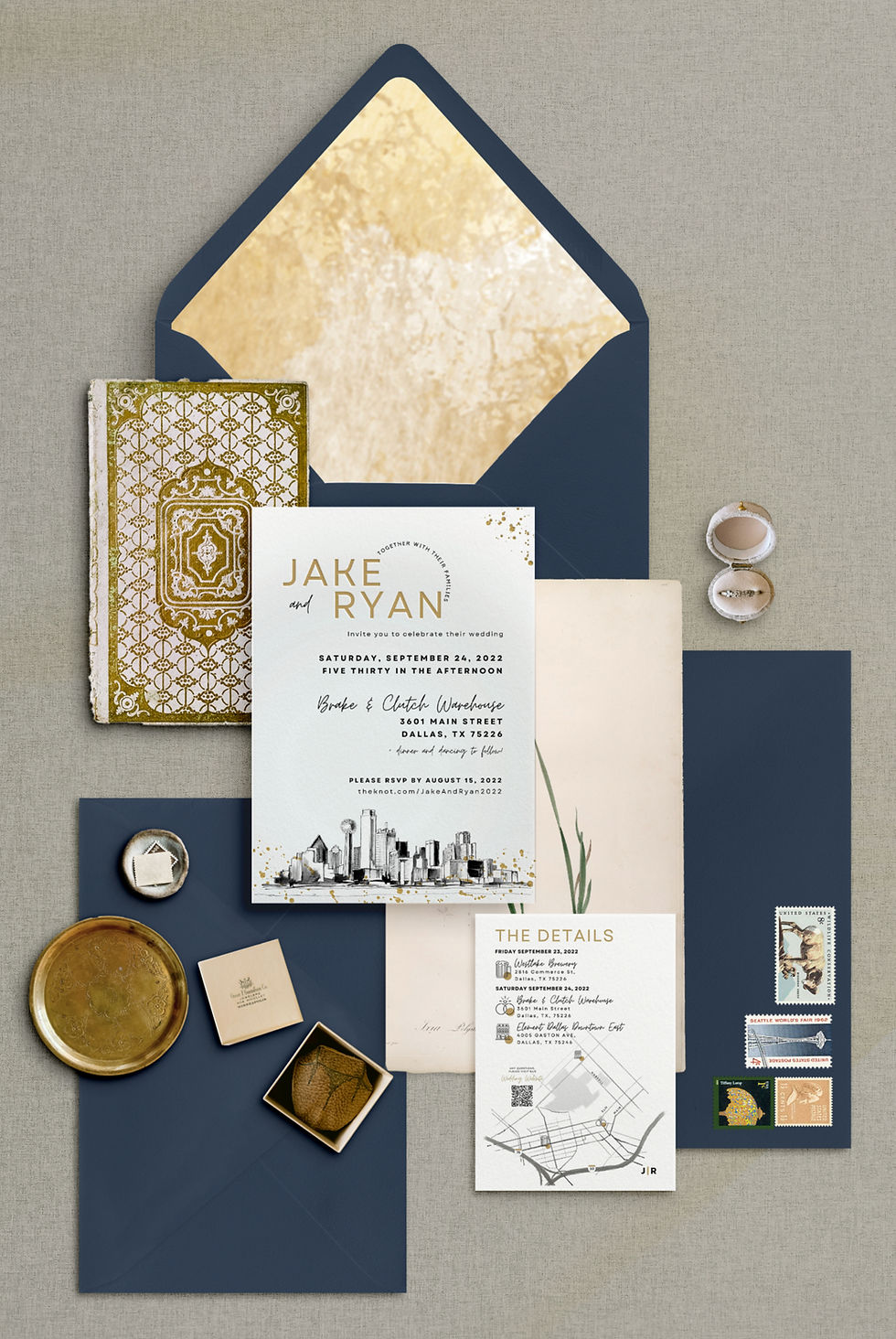
Foil stamping uses heat and pressure to apply metallic foil to paper. Gold and silver are the most common choices, but there are many color options available.
Foil adds shine and contrast, making it ideal for highlighting names, monograms, or key details. It pairs beautifully with both classic and modern designs, but works best when used sparingly.
Die Cuts

Die cutting allows paper to be cut into custom shapes rather than standard rectangles. This can be as subtle as rounded corners or as bold as a completely custom silhouette.
Die cuts add a unique, custom feel and are often used to echo architectural elements, motifs, or design details from the wedding. They are a great option for couples who want something distinctive without adding extra layers.
Vellum Wraps and Overlays

Vellum is a translucent paper that adds softness and dimension. It is often used as a wrap around the invitation or as an overlay printed with additional details.
Vellum works well for layering and adds interest without overwhelming the design. It pairs especially well with minimalist or romantic styles.
Ribbon, Twine, & Belly Bands

These elements help hold an invitation suite together while adding texture and color. Silk ribbon, velvet ribbon, twine, and paper belly bands each create a different mood, from relaxed to refined.
These embellishments are often chosen based on the overall aesthetic of the wedding and can be easily customized to complement the color palette.
Embossing & Debossing

Embossing and debossing are similar techniques, but they create very different effects.
Embossing raises the design above the surface of the paper. When you run your fingers over it, you can feel the design standing out. It tends to feel more traditional and decorative, and it catches light more easily.
Debossing presses the design into the paper instead. The result is subtle and refined, with the design sitting below the surface. Debossing is often chosen for a more modern or understated look.
Both techniques rely on pressure rather than ink, which means they work best with simple designs and high-quality paper. The choice usually comes down to whether you want the detail to stand out or quietly blend into the overall design.
Handmade Paper

Handmade paper is known for its soft texture, natural deckled edges, and organic feel. Each sheet is formed individually, which means no two pieces are exactly the same. Subtle variations in thickness, shape, and fiber are part of what makes handmade paper so special.
Because of its texture and irregular edges, handmade paper pairs beautifully with simpler designs and printing methods like letterpress or digital printing. It is often chosen for couples who want their stationery to feel artisanal, romantic, and one-of-a-kind. Handmade paper does require extra consideration for printing, assembly, and mailing, but the result is a truly distinctive piece that feels as special as the occasion itself.
Choosing the Right Embellishments
Not every invitation needs every embellishment. In fact, the most successful designs are often the most intentional. A single well-chosen detail can have more impact than layering several at once.
If you’re unsure what makes sense for your suite, we can help guide those decisions. We’ll consider your design, printing method, budget, and mailing needs to recommend embellishments that feel thoughtful, cohesive, and true to your wedding.


Comments